“Hugo, it’s legal! I’m not the arbiter of what is the law in your country!” These are the words of Sarah Bain, the Vice President of Public Engagement at Ethical Capital Partners (ECP), the new owner of Pornhub. Ignore the name of this newly established equity firm for a moment. Bain is on a mission, and there’s only one objective—prove to the world that pornography is normal for society, and Pornhub is on your side.
It’s February 2025. Hugo Rifkind of The Times (UK) is running an interview with Bain, and he’s stunned. Having asked how many children visit Pornhub, Bain’s answer is simple: “none”. She then proceeds to shift the question to how children discover porn online, boldly asserting, “I do not believe that young people are coming to Pornhub or to [any] other of our sites.” She argues that UK government data should demonstrate how “the entry point for young people into adult entertainment is through social media”, moving the responsibility. “They don’t type in the name of an adult website … they go through social media to get there.”
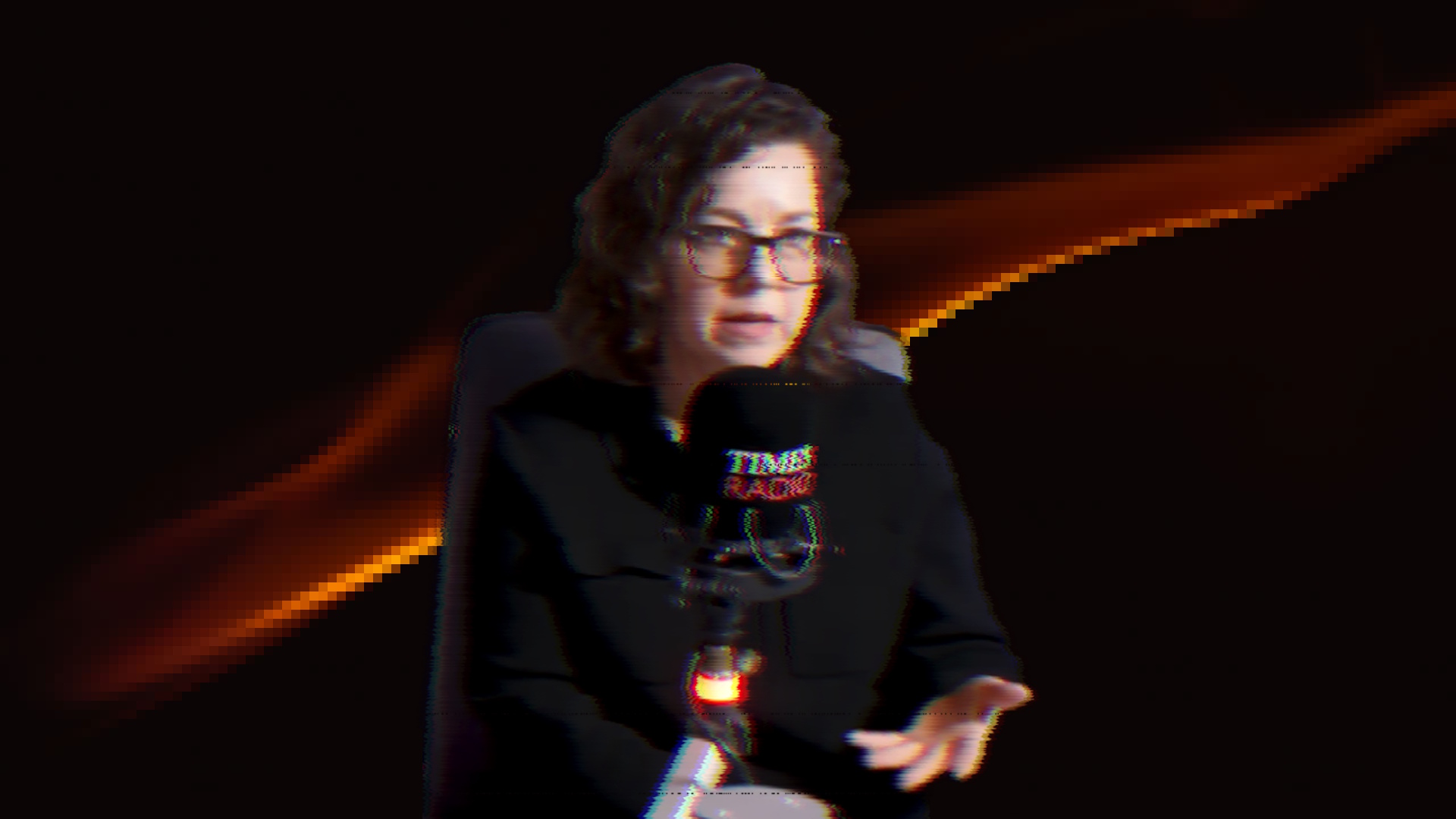
Sarah Bain, Vice President of Public Engagement at Ethical Capital Partners
The following day, recounting the interview in an article titled Porn Lords Couldn’t Care Less About Our Kids, Rifkind shares his thoughts on the matter:
This woman was not a moron. She knew what she was saying. Really, she did not mean “none”. Rather, she meant “none whom we consider to be our problem”.
Rifkind proceeds by sharing a selection of titles that had been gathered from active videos on Pornhub:
- She Was Half His Age
- Nympho Teen Can’t Get Enough
- Rough Sex After Lingering Photo Shoot With Teen Model
During the interview, Bain struggles to respond to these titles: “We are not here to police people’s kinks!” After Rifkind mentions categories available on Pornhub, such as “Babysitter” and “School”, he concludes the article with the following observation:
Yes, the performers may be at least 18—but who are their performances for? Older kids at school? Middle-aged men who like fantasising about kids at school? Which of those is supposed to be better? Whose responsibility is this even supposed to be? … [Porn companies] chose to [provide services to the public]. And [they] keep on choosing to do it, every damn day after day.
During a separate interview in 2026 with The Times reporter Helen Rumbelow, ECP mention that they had decided to remove the “Teen” category from Pornhub. Let’s take into consideration a critical question: How did we get to this stage?
Hidden in Plain Sight
In December 2020, Nicholas Kristof, a journalist for The New York Times, published an opinion article titled The Children of Pornhub. In the article, Kristof alleges that Pornhub was “infested with rape videos.” As one example, Kristof mentions how “after a 15-year-old girl went missing in Florida, her mother found her on Pornhub—in 58 sex videos”. The centre of the article surrounds the story of a separate girl, where at 14 years old, “she developed a crush on a boy a year older, and he asked her to take a naked video of herself”. Carrying this out several times, the videos eventually leaked onto Pornhub, where she would experience classmates “mocking [her] as a slut”. The videos were taken down and the girl was switched to another school, but “rumors reached the new school, and soon the videos were uploaded again to Pornhub and other websites”. Following this, she began self-harming, along with attempting to commit suicide.
Kristof also documents how a prior Pornhub scandal had involved GirlsDoPorn, a pornography company run by New Zealand nationals Michael Pratt and Matthew Wolfe, who both moved to the United States. After recruiting girls for “clothed modeling gigs”, GirlsDoPorn would subsequently coerce them “to perform in sex videos, claiming that the videos would be sold only as DVDs in other countries and would never go online”. This was a bold-faced lie: after production, the videos were quickly uploaded to Pornhub for monetisation.
The Great Pornhub Purge
The week after the publication of Kristof’s exposé, The New York Times reported that Visa and Mastercard had both suspended payment services for Pornhub. During the Mastercard investigation, they “confirmed violations of our standards prohibiting unlawful content on [Pornhub]”. In a published statement, Pornhub called the terminations “exceptionally disappointing”.
Several days later, Vice broke the story that Pornhub was in the process of wiping millions of videos uploaded by unverified users. Axios later reported that prior to deletion, Pornhub hosted 13.5 million videos, where this figure fell to less than 3 million. This means that approximately 78% of the entire library was erased, where more than 10 million videos were deleted. (In 2024, The Washington Post reported an ECP figure of 8 million deleted videos, being approximately 59% of the library.)
Clearance Sale
In March 2023, Deadline reported that MindGeek, the Canadian parent of Pornhub, had been acquired by Ethical Capital Partners “for an undisclosed amount”. However, through court documents obtained by the Luxembourg Times two years later, the figure was revealed to be $400 million USD (almost $645 million NZD). Perhaps the most interesting part of this report is how ECP purchased MindGeek for “far below the profit … announced in 2021, the last year for which [MindGeek] filed what are supposed to be annual accounts”—this was disclosed as $583 million ($851 million NZD). Several months after its purchase, MindGeek was rebranded as Aylo.
In December 2023, The New York Times reported that Aylo would settle in court surrounding the GirlsDoPorn controversy, which had occured prior to being acquired by ECP. According to Ars Technica, Wolfe was arrested in October 2019, and the Los Angeles Times reported that Pratt was a fugitive for over three years until December 2022, when he was arrested in Spain, and subsequently extradited to San Diego in March 2024. Radio New Zealand reported that Wolfe was sentenced to 14 years imprisonment, and 404 Media reported that Pratt was sentenced to 27 years.
In May 2025, Kristof published a new article titled These Internal Documents Show Why We Shouldn’t Trust Porn Companies. The article details how through a court filing mistake, documents regarding internal operations at Pornhub were leaked. Kristof mentions two examples of leaked internal messages between employees in 2020 and prior:
- “I hope I never get in trouble for having those vids on my computer LOOOOL”
- “There is A LOT of very, very obvious and disturbing [child sexual abuse material] here”
In addition, Kristof mentions how at one stage, Pornhub began to require logging in with an account to flag videos, where an internal corporate message mentioned how making this change “will greatly reduce overall flag volume”. There is also a case where an employee advises a colleague to not inform a manager after finding child sexual abuse material. The latter employee replies to this by messaging, “He doesn’t want to know how much [child pornography] we have ignored for the past five years?”
After reaching out for new stories, Kristof reports of a new 15-year-old girl. Having been drugged by a female friend and taken to a stranger’s house (where she subsequently blacked out), she woke up at home more than a day later. After being called a “slut” at school, her mother received calls saying, “Your daughter is a whore.” After being sent an email with a link to a Pornhub video, the girl discovered that she had been recorded for 45 minutes “being raped by four men in their late 20s or older”.
Kristof even mentions the following: “while I’ve written about terrorists, gangsters, and extremists, I got more death threats after [the] article [on The Children of Pornhub] than from any other I’ve ever written.”
Don’t Tread on My Business
“You are talking about an industry that is powered on both the creation and the consumer side by the most significant biological instinct.” So replies Solomon Friedman, the Vice President of Compliance at ECP, talking to The Times reporter Helen Rumbelow during a May 2026 interview of ECP and Aylo representatives. She had asked, “Would humanity be better off without free internet porn?” Friedman argues, “No such magic wand exists. But good policy does exist, where you can do things like ensure the safety and the protection of people creating legal and constitutionally protected material and the safety of individuals who are enjoying that material, right? We’re going to continue fighting for it.”

Solomon Friedman, Vice President of Public Engagement at Ethical Capital Partners
The atmosphere becomes more tense. After Friedman argues for the subjectivity of social ethics, Sarah Bain states, “Our litmus is not ethical, it’s legal.” However, Friedman chimes in, sharing his perspective: “We do believe that Aylo is legally and ethically run. We’re very proud to be the owners of Aylo. You know what makes us proud? It’s a very long list.” Friedman continues by boasting about how Pornhub now supports the instant delisting of videos flagged by visitors as allegedly containing underage individuals or non-consensual behaviour.
Rumbelow and ECP continue by debating the legitimacy of allowing porn video titles to contain the keywords “tiny teen”. Alex Kekesi, the Vice President of Brand and Community at Aylo, attempts to rebut Rumbelow by saying, “OK, to you that sounds wrong. It’s legal.” After Rumbelow replies that she knows the terminology itself is legal, Friedman contests, “Do you know about other platforms and other sites? There’s obviously an evolution here.”
Friedman’s response amounts to a logical fallacy called “whataboutism”, where a defending party responds to criticism by shifting attention to the conduct or practices of others rather than addressing the criticism itself. Friedman is seeking to show how legal keywords that could infer a dubious context should be acceptable, because other websites aren’t matching the level of moderation carried out by Aylo. The latter was never the issue at question. But it’s all too risky for ECP—after the interview, Bain sends Rumbelow a text, mentioning that the keywords “tiny teen” are now banned from all video titles.
Conclusion
Since acquiring MindGeek, Ethical Capital Partners have been busy conforming Pornhub to legal adequacy, along with lobbying governments and organisations worldwide in order to defend its business interests. To create the Pornhub Network, MindGeek purchased a range of porn websites in the 2010s, figuring out how to take advantage of Google Search results and increasing cultural noteriety—this culminated in a peak of 150 million daily visitors in 2022. The end result for ECP could look like a lucrative bargain. But even after the purging of countless videos by MindGeek, ECP has struggled in the public arena on multiple occasions to demonstrate the ethics of its newly-acquired service. Can they continue to grow in spite of critique, or will it all come crashing down?
Safe Surfer is an innovative software company based in Tauranga, New Zealand. We’re passionate about using the latest technology behind-the-scenes to give you the ability to provide your loved ones with a remarkably clean online surf experience. Visit the Safe Surfer dashboard today to protect your devices (Android, iPhone and iPad, Windows, Mac, and more) from porn and other harmful online content.